

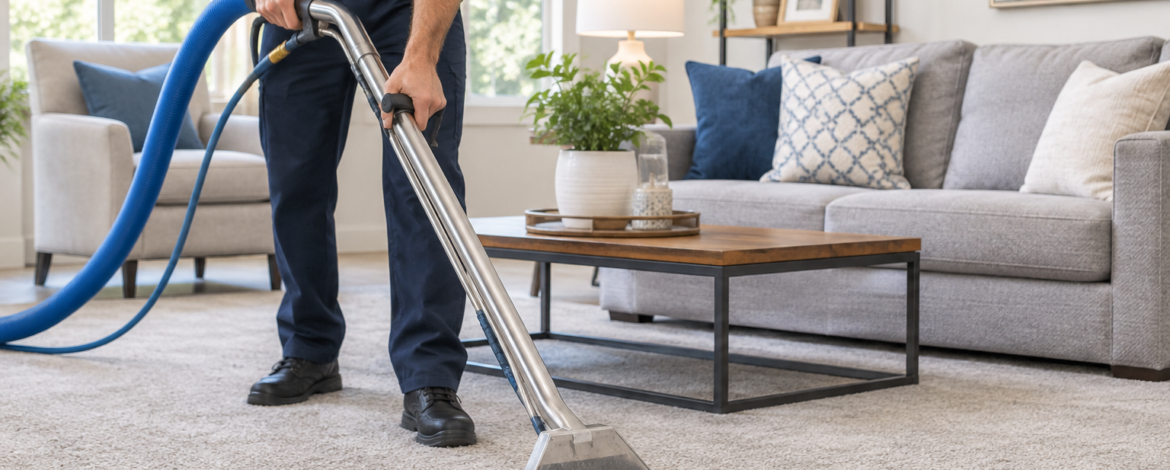
Most homes should have their carpeting professionally cleaned every 12 to 18 months. Households with pets, young children, smokers or allergy sufferers usually do better on a 6 to 9 month cycle, while a quiet adult household with light foot traffic can often stretch to 24 months before soiling becomes visible or a warranty is put at risk.
The Short Answer: Every 12 to 18 Months for Most Homes
The standard recommendation across the carpet industry is professional hot water extraction at least once every 12 to 18 months. Your actual interval depends on how many feet, paws and spills cross the fibers each week.
- Single adult or couple, no pets: every 18 to 24 months
- Typical family household: every 12 months
- Homes with one or more dogs or cats: every 6 to 9 months
- Allergy or asthma sufferers in the home: every 6 months, sometimes quarterly in bedrooms
- Toddlers, home daycare or frequent entertaining: every 6 to 9 months
- Light-colored or plush carpet in entry areas: every 6 to 12 months
Those numbers describe whole-house service. Many homeowners split the difference by having traffic lanes, stairs and family rooms cleaned twice a year and guest bedrooms done once every other visit.
What Carpet Manufacturers Require to Keep a Warranty Valid
Most major carpet mills require documented professional cleaning every 12 to 24 months, performed by hot water extraction, or the stain and wear warranty becomes void. They also expect you to keep the receipts.
This is the part homeowners discover too late, usually after a traffic lane mats down in year four and the claim gets denied. Rental machines and most grocery-store steam units do not satisfy the requirement, since manufacturers specify extraction equipment that recovers the solution rather than leaving it in the backing. The Carpet and Rug Institute maintains the testing program that many of those warranty clauses reference.
Before you book, pull your purchase paperwork and look for the cleaning interval written into the warranty. If the document says 18 months and you clean at 24, you have quietly given up the coverage you paid for.
Which Households Need Cleaning More Often
Pets, children, smoking, light carpet color and a busy front entry are the five factors that pull a 12-month schedule down to 6 months. Each one adds either soil volume or odor that vacuuming cannot remove.
- Pets: dander, oils from fur and the occasional accident soak into the backing, where odor rebounds in humid weather
- Allergies: carpet holds dust mite allergen, pollen and pet dander, and the EPA’s indoor air quality guidance notes that settled particles are re-released when fibers are disturbed
- Entry traffic: homes without a mudroom or shoe-off rule track in road grit, de-icing salt and lawn chemicals
- Smoking or frequent fireplace use: tar and soot bond to fibers and dull the color within months
- Open-plan kitchens: airborne cooking grease settles on nearby carpet and makes it attract soil faster
If three or more of these describe your home, treat 6 months as the baseline rather than the exception. Spot cleaning between visits does not change the math, because it addresses visible marks and not the fine grit at the base of the pile.
What It Costs You to Wait Too Long
Dry soil is abrasive. Every step grinds those particles against the fibers like sandpaper, and that abrasion, not staining, is what permanently dulls traffic lanes and shortens carpet life by several years.
A professional cleaning typically runs $150 to $400 for a few rooms, or roughly $0.25 to $0.55 per square foot in most of Bucks and Montgomery County. Replacing the same carpeting with mid-grade material and pad installed usually lands between $3 and $6 per square foot. Cleaning on schedule for a decade still costs a fraction of one early replacement.
Carpet that has gone three or four years without professional attention can often be brought back a long way, though fibers that have already lost their twist will stay matted. That is the dividing line between soil removal and wear.
How to Care for Carpet Between Professional Visits
Vacuum high-traffic areas two to three times a week and the rest of the house weekly, using slow passes so the beater bar has time to lift grit out of the pile. Everything else is damage control on spills.
- Blot spills immediately with a white towel, working from the outside of the spot inward
- Skip over-the-counter foams that leave sticky residue, which pulls soil back to the same spot within weeks
- Use walk-off mats at every exterior door and change them seasonally
- Rotate furniture a few inches once or twice a year so crush marks do not set
- Keep a record of cleaning dates for the warranty file
How the Cleaning Method Affects Your Schedule
Hot water extraction removes the deepest soil and is what most warranties specify, while low-moisture methods dry in about an hour and suit homes that cannot be out of service for long. The deeper the clean, the longer you can safely wait between visits.
Extraction with truck-mounted equipment normally leaves carpet dry in 4 to 8 hours with good airflow. If you are weighing the two approaches for your own floors, the breakdown in steam cleaning versus dry carpet cleaning covers which fibers and situations favor each one.
The Best Time of Year to Book in 2026
Late spring and early fall are the two strongest windows. Spring removes a winter’s worth of salt and grit, and fall resets the carpet before holiday guests arrive and before windows stay shut for months.
January and February are the quietest weeks for most cleaning companies in the Philadelphia suburbs, so scheduling then often means faster appointment availability. Homeowners in Bucks County frequently pair a post-holiday visit for carpet cleaning in Southampton with other interior work while the house is already emptied out.
Services Worth Scheduling at the Same Time
Carpet is one piece of the soil and allergen load in a house. Booking adjacent services in one visit saves on trip minimums and keeps freshly cleaned fibers from being re-contaminated a week later.
- Tile and grout: grout lines in adjoining kitchens and baths hold soil that gets tracked onto carpet, which is why many homeowners add tile and grout cleaning on the Main Line to the same appointment
- Hardwood: open floor plans mean one dirty surface feeds the next, and professional hardwood floor cleaning finishes the job in mixed-flooring homes
- Dryer vents and ducts: lint and duct dust settle right back onto clean carpet, and the guidance on how often a dryer vent needs cleaning lines up closely with the carpet schedule
Frequently Asked Questions
How Often Should You Get a Carpet Cleaned?
Every 12 to 18 months for an average household, and every 6 to 9 months with pets, small children or allergy sufferers in the home. Check your warranty document as well, since many manufacturers set their own required interval and ask for proof of professional service.
Can Carpet Trigger Allergies?
Yes. Carpet holds dust mite allergen, pet dander, mold spores and pollen, and those particles become airborne when people walk across the fibers. Regular extraction cleaning plus a vacuum with a HEPA filter measurably reduces the reservoir, which is why allergy households often clean every 6 months.
Is It Worth Cleaning a 20 Year Old Carpet?
Usually yes, as long as the backing is intact and the carpet is not delaminating or separating at the seams. A $200 cleaning can buy another year or two before a replacement that costs thousands, though matted traffic lanes and worn-away pile will not come back because that is fiber damage, not soil.
How Many Passes Should I Do With a Carpet Cleaner?
Plan on one or two wet passes followed by three to four dry recovery passes over the same strip. Most residential over-wetting problems come from the opposite ratio, since leftover moisture in the backing is what causes slow drying, wicking stains and musty odor.
Book Your Next Professional Carpet Cleaning
If it has been more than a year since your carpeting was professionally cleaned, now is the point where soil starts doing permanent damage rather than just looking bad. Call to check availability and get a per-room price for your home.