

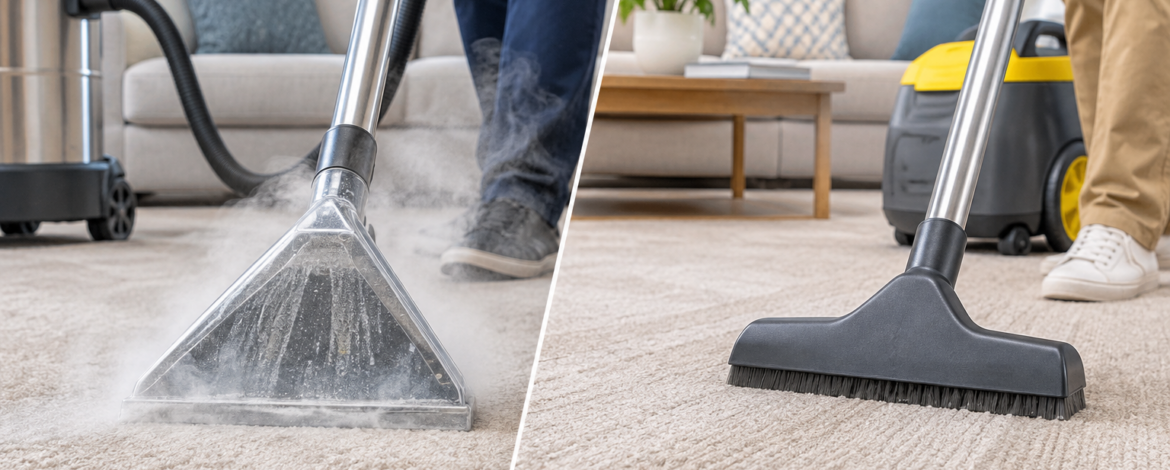
Steam cleaning (properly called hot water extraction) flushes carpet with water heated to roughly 200 to 230 degrees Fahrenheit and vacuums it back out, while dry carpet cleaning uses a low-moisture compound or polymer that lifts soil with a fraction of the water. The right choice usually comes down to three things: how dirty the carpet is, what the fibers are made of, and how fast you need the room back in service. Both methods are legitimate, and both are misused often enough that homeowners end up blaming the carpet instead of the process.
What Hot Water Extraction Actually Does to Soil
A truck-mounted extraction unit heats water, injects it into the pile under 300 to 500 PSI along with a pre-applied detergent, then pulls the slurry out through a vacuum head. The heat softens oily residue that dry methods tend to skim over, and the volume of water carries suspended soil out of the carpet rather than redistributing it.
Most carpet mills, including Shaw and Mohawk, name hot water extraction as the method required to keep a residential warranty intact. That alone pushes many homeowners toward steam, especially on newer nylon or triexta installations still inside a 10 or 15 year warranty window.
Where extraction earns its reputation:
- Deep or ground-in soil in hallways, stairs and entry paths that see daily traffic
- Pet accidents that have reached the backing, where only flushing with volume plus a sub-surface tool removes the source
- Allergen reduction, since dust mite debris and fine particulate get carried off in the waste tank instead of being agitated into the air
- Greasy residue near kitchens and family rooms, which cold or dry methods soften poorly
The trade-off is moisture. Even a well-executed extraction leaves carpet damp, and poor technique (too much solution, weak vacuum, no airflow afterward) is what produces the musty smell people associate with steam cleaning.
How Low-Moisture and Dry Methods Work
“Dry cleaning” covers several different systems, and they do not perform identically. The most common in homes are encapsulation, bonnet cleaning and absorbent compound.
- Encapsulation: a polymer solution is sprayed and brushed in, crystallizes around soil particles as it dries, then the brittle crystals are vacuumed up the next day. Water use is roughly 10 to 20 percent of extraction.
- Bonnet cleaning: an absorbent pad spins across a lightly misted surface, picking up soil from the top third of the pile. Fast, but it is a surface treatment, not a deep clean.
- Absorbent compound: a slightly damp, sawdust-like material is worked into the fibers with counter-rotating brushes, left 15 to 30 minutes, then vacuumed out. The carpet is walkable almost immediately.
These methods shine in situations where downtime is the real constraint: a home office you cannot shut down, a wool rug sensitive to prolonged wetting, or a basement where humidity already runs high and slow drying invites trouble.
Drying Time, Side by Side
This is the difference homeowners feel most. Hot water extraction typically leaves carpet dry in 6 to 12 hours with fans running and reasonable airflow, and it can stretch past 24 hours in a humid August week in southeastern Pennsylvania with the windows shut.
Low-moisture encapsulation usually hits touch-dry in 1 to 2 hours, and compound systems are walkable in under 30 minutes. If you want specifics on what dry really means versus walkable, we covered the timeline in detail: how long until you can step on your carpet after a cleaning.
Drying speed matters beyond convenience. The EPA notes that damp materials left wet beyond 24 to 48 hours can support mold growth, which is why a competent technician uses air movers rather than hoping the HVAC handles it.
Matching the Method to Your Carpet Fiber
Fiber type changes the calculation more than most people expect. Synthetic broadloom tolerates heat and water well, while natural fibers behave very differently when saturated.
- Nylon and triexta: excellent candidates for hot water extraction, and both respond well to heat for stain release
- Olefin (polypropylene): hydrophobic and oil-loving, so it holds greasy soil and often needs extraction with a solvent-based pre-spray to look right
- Wool: tolerates extraction only with controlled temperature and pH near neutral, since alkaline chemistry and high heat damage the protein fiber and can cause browning
- Silk and viscose area rugs: rarely good candidates for in-home wet cleaning at all, and viscose in particular yellows and loses texture when wet
If your project is an area rug rather than wall-to-wall carpet, the answer shifts again, and we break that down in our look at whether an area rug can be steam cleaned.
Cost and Realistic Frequency
Pricing in Bucks and Montgomery County generally runs $0.30 to $0.60 per square foot for hot water extraction on residential carpet, or roughly $45 to $75 per average room, with stairs billed separately. Low-moisture work is often priced within 10 to 20 percent of that, since the labor is similar even though water use is lower.
Most carpet manufacturers want professional cleaning every 12 to 18 months, and homes with pets, kids, or multiple allergy sufferers usually benefit from a 6 to 12 month cycle. Commercial encapsulation programs run more often (quarterly or monthly) precisely because the method is fast and cheap to repeat.
When Combining Both Makes the Most Sense
Plenty of homes do best on a rotation: an annual hot water extraction to pull out the deep load, with an interim low-moisture service between visits to keep traffic lanes from graying. That pattern gives you the restorative depth of extraction without the drying downtime four times a year.
Carpet is also only one part of the dust equation. If a room keeps looking dull a few weeks after cleaning, the source is often soft goods and air handling rather than the floor itself. Fabric panels and furniture hold the same fine particulate, which is why many clients pair floor work with professional upholstery cleaning on the Main Line and a refresh of draperies and window treatments in the same visit.
Air distribution matters too. Homes that have recently been renovated, or that have never had the system serviced, push settled construction dust and debris back onto freshly cleaned carpet, and scheduling air duct cleaning on the Main Line before the carpet work keeps the result lasting longer. The same logic applies to lint buildup behind the laundry, which is why dryer vent cleaning frequency is worth checking on the same schedule.
Frequently Asked Questions
Does Steam Cleaning Really Use Steam?
No, it uses hot water at roughly 200 to 230 degrees Fahrenheit, not vapor. The industry term is hot water extraction, and the IICRC standard S100 treats it as the primary restorative cleaning method for residential carpet.
Which Method Removes Pet Odor Better?
Hot water extraction removes pet odor far more effectively because urine soaks through the backing into the pad, where only flushing and subsurface extraction can reach it. Low-moisture methods treat the surface and may mask odor for a few weeks before it returns in humid weather.
Will Dry Carpet Cleaning Leave Residue?
Encapsulation leaves a polymer film by design, and it is removed through vacuuming over the following days. Problems appear when a home vacuums infrequently, since leftover crystals can attract soil and make traffic lanes resoil faster than expected.
How Soon Can I Put Furniture Back?
Wait until the carpet is fully dry, usually 6 to 12 hours after extraction or 1 to 2 hours after a low-moisture service, and use foam blocks or foil tabs under wooden legs. Metal and dark-stained wood can transfer rust or stain into damp fibers within hours.
Can Both Methods Be Used on the Same Carpet?
Yes, and alternating them is common practice. An annual extraction paired with one or two interim low-moisture cleanings keeps high-traffic areas presentable without the longer drying windows.
Schedule Your Carpet Cleaning Assessment
Tell us the fiber type, the traffic pattern, and how quickly you need the room back, and we will recommend the method that fits instead of defaulting to one. See current options and service areas on our Main Line carpet cleaning page or contact our team to get your rooms measured and quoted.